President: Alexis Rouillard
(Emailst@egu.eu)
Deputy President: Emilia Kilpua
(Email)
ECS Representative: Andreas Wagner
(Emailecs-st@egu.eu)
The Division on Solar-Terrestrial Sciences (ST) considers all aspects of solar and heliospheric physics, specifically the solar-terrestrial connection. It covers the physical processes occurring on the Sun, in the solar wind, as well as in Earth's magnetosphere and ionosphere. Solar activity (e.g. coronal mass ejections, solar flares, solar energetic particle events) and the response of the near-Earth space environment to these solar phenomena are studied on a wide-range of temporal and spatial scales. Data analysis and interpretation of space-borne and ground-based data, as well as theoretical studies and different modelling techniques are used to better our understanding of how our local star defines the neighbourhood that we live in.
Latest posts from the ST blog
Don’t Miss the EGU-ST Early-Career Scientist Events during EGU26!
As the EGU General Assembly (GA) 2026 approaches, Solar-Terrestrial (ST) Division Early-Career Scientist (ECS) team organized various events to give researchers a platform to network with their peers, and strengthen our community! What is ECS? Students (BSc, MSc), PhD candidates and researchers who obtained their highest academic degree in the last seven years are Early-Career Scientists as EGU guidelines indicates. We welcome all ECS to our informal events during the general assembly! You can also find these events on the …
Read more

ST-ECS Networking Campfire: “How to Mentor”
In academia, success is often measured with quantifiable outputs such as publications, grants, and awards. On the other hand, the challenging road leading to this success is not something discussed openly. The relationship we build with our colleagues, the support and guidance we receive from mentors and supervisors are important factors affecting our success as individuals and as a community. Mentors play a crucial role in this guidance through constructive feedback, encouragement, or sometimes just being there to listen. Support …
Read more
On the correlation and interactions of space weather with biological indicators
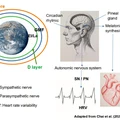
1. Introduction Space weather is significantly affected by geomagnetic disturbances (GMDs) that occur during or after intense solar events such as coronal mass ejections (CMEs), which expel substantial amounts of electromagnetic particles into interplanetary space. Most of these particles collide with the magnetosphere (the outermost region of the atmosphere) where the solar wind (continuous flow of ionized particles) meets the Earth’s magnetic field and can cause compression of the magnetosphere [Gonzalez et al. 1998]. GMDs occur most frequently at the …
Read more
Probing the Solar Wind with Spacecraft Radio Occultation Signals: Chasing a Unified Method to Probe the Sun
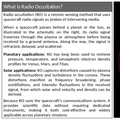
Introduction The solar wind, a continuous outflow of charged particles from the solar corona, plays a fundamental role in shaping the heliosphere and driving space weather. Its interaction with planetary magnetospheres and atmospheres regulates magnetospheric dynamics, influences atmospheric escape, and governs space weather hazards that can affect both space- and ground-based technologies. Despite over six decades of study, many aspects of the solar wind remain poorly understood, particularly the processes responsible for its acceleration in the near-Sun region between 1.5 …
Read more
Recent awardees

The 2026 Hannes Alfvén Medal is awarded to
Jana Šafránková for pioneering research in space plasma and dusty plasma physics, including establishing a unique laboratory facility for dust measurements and mentoring a new generation of scientific leaders.
Read more

The 2026 Hannes Alfvén Medal is awarded to
Zdeněk Němeček for pioneering research in space plasma and dusty plasma physics, including establishing a unique laboratory facility for dust measurements and mentoring a new generation of scientific leaders.
Read more

- 2026
- Division Outstanding Early Career Scientist Award
The 2026 Division Outstanding Early Career Scientist Award is awarded to
Samuel Badman for outstanding research on the physics of the solar wind measured by the Parker Solar Probe and Solar Orbiter.
Read more

- 2025
- Julius Bartels Medal
The 2025 Julius Bartels Medal is awarded to
Richard Horne for outstanding work on understanding the acceleration and transport processes of charged particles in the inner magnetosphere, the formation of the radiation belts and their space weather effects.
Read more

- 2025
- Division Outstanding Early Career Scientist Award
The 2025 Division Outstanding Early Career Scientist Award is awarded to
Karin Dissauer for outstanding research in solar and extra-solar space weather research.
Read more

- 2025
- Outstanding Student and PhD candidate Presentation (OSPP) Award
The 2025 Outstanding Student and PhD candidate Presentation (OSPP) Award is awarded to
Carlos Castillo-Rivera Evaluation of Interhemispheric Asymmetry using Total Electron Content at High Latitudes During Geomagnetic Storms
Read more

- 2025
- Outstanding Student and PhD candidate Presentation (OSPP) Award
The 2025 Outstanding Student and PhD candidate Presentation (OSPP) Award is awarded to
Qianyi Ma Multi-spacecraft Observations of Interplanetary Suprathermal Electrons in a Shock-ICME Interaction Region
Read more
Current issue of the EGU newsletter
In our March issue, we are preparing for the annual General Assembly on the EGU blogs and with a special webinar to help all EGU26 attendees refresh their knowledge of the meeting we are all systems go here in EGU HQ! Also learn about what it's like to spend 25 years working with Interactive Open Access publishing, don't miss out on science for policy events at EGU26, and the EGU awards and medals are now open for nominations - the process is probably easier than you think!
All this and much more, in this month's Loupe!
Read more