- 11 May 2026
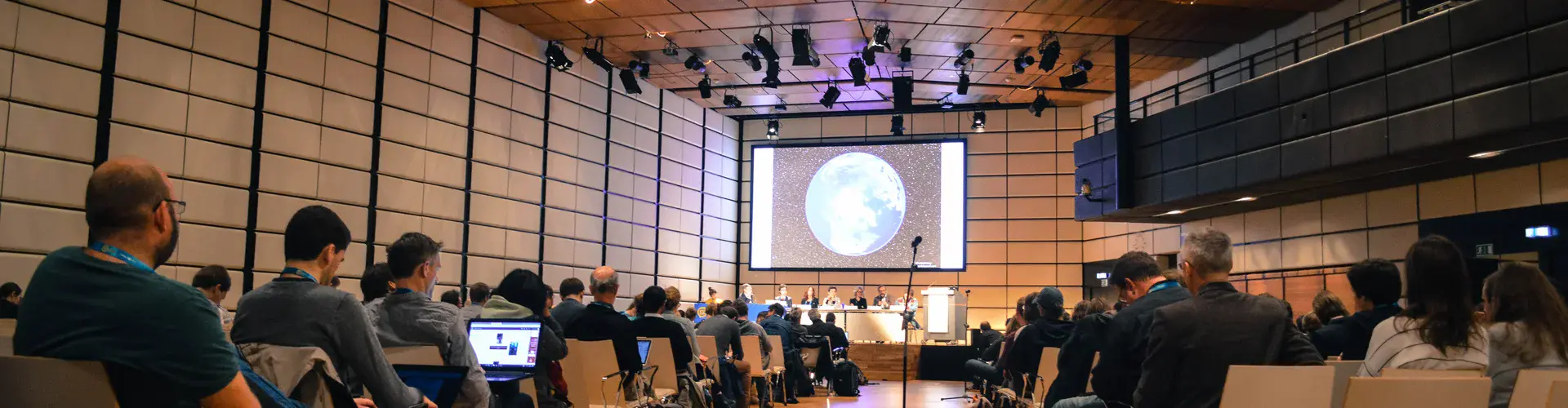
Thanks to the enthusiastic efforts of our members and volunteers, EGU26 was another record breaking year with an amazing 22,497 people participating in the General Assembly, both in Vienna and online!
European Geosciences Union
www.egu.euThanks to the enthusiastic efforts of our members and volunteers, EGU26 was another record breaking year with an amazing 22,497 people participating in the General Assembly, both in Vienna and online!
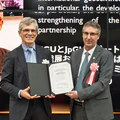
EGU has selected 10 member-proposed, high-profile or ‘out-of-the-box’ not-for-profit activities, with high visibility and large impact to receive up to 30,000€ from the EGU Special Activity Fund.
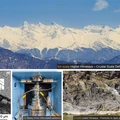
New research shows extreme heat and humidity are already pushing Hajj pilgrims beyond survivability limits, with the greatest danger during Arafat and future pilgrimages expected to become more hazardous.
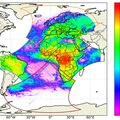
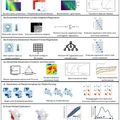
Solar storms can quietly disrupt satellites, power grids, and communication systems across the globe. After a 2022 geomagnetic event knocked out dozens of Starlink satellites, the risks are no longer hypothetical. At EGU26, scientists unveil Swarm-AWARE, a new ESA project using satellite data and machine learning to distinguish space weather signals from natural hazards, paving the way for smarter forecasting and more resilient infrastructure.
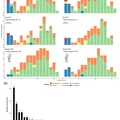
For 350 million years, ammonites were the resilient masterpieces of the ancient seas. They survived the Great Dying of the Permian-Triassic, an event that wiped out 96% of marine life, only to vanish during the end-Cretaceous extinction that claimed the dinosaurs. Meanwhile, their less-diverse cousins, the nautiloids, sailed through the catastrophe and still inhabit our oceans today.
Why did the invincible ammonites fail while the nautiloids endured?
Archita Bhattacharyya is an Environmental Scientist and a research and development fellow at the Department of Environment, Food and Rural affairs, England. For 2026, she is the Early Career Scientist Representative for the Hydrological Sciences division. Can you tell us about the focus of your research? In my PhD, I focused on groundwater microbiology, especially how microbial communities change across space and time in different aquifer geologies. This involved studying the aquifer microbiology using flow cytometry and DNA sequencing and …
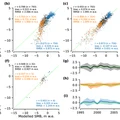
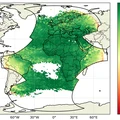
Every year on 21 June, the global scientific community celebrates World Hydrology Day to highlight the importance of water sciences play in sustainable resource management and natural hazard mitigation. Historically, human efforts to protect and manage freshwater have suffered from a blind spot. While we can easily measure a river’s flow at a specific gauging station, predicting how an untouched, ungauged valley will respond to a heavy storm or a prolonged drought has remained notoriously difficult. We have long relied …
The journey to a Ph.D. is never smooth sailing, plenty who have dared to tackle it will agree. But what if this strenuous, maybe even torturous, endeavor is the easiest part of your life? Welcome to my journey, which I am calling “Transitioning during your PhD”. Let’s start with a quick backstory. My doctoral journey started in 2024 and I was early in my transition. I came out to my friends and family, but I had not yet taken any …